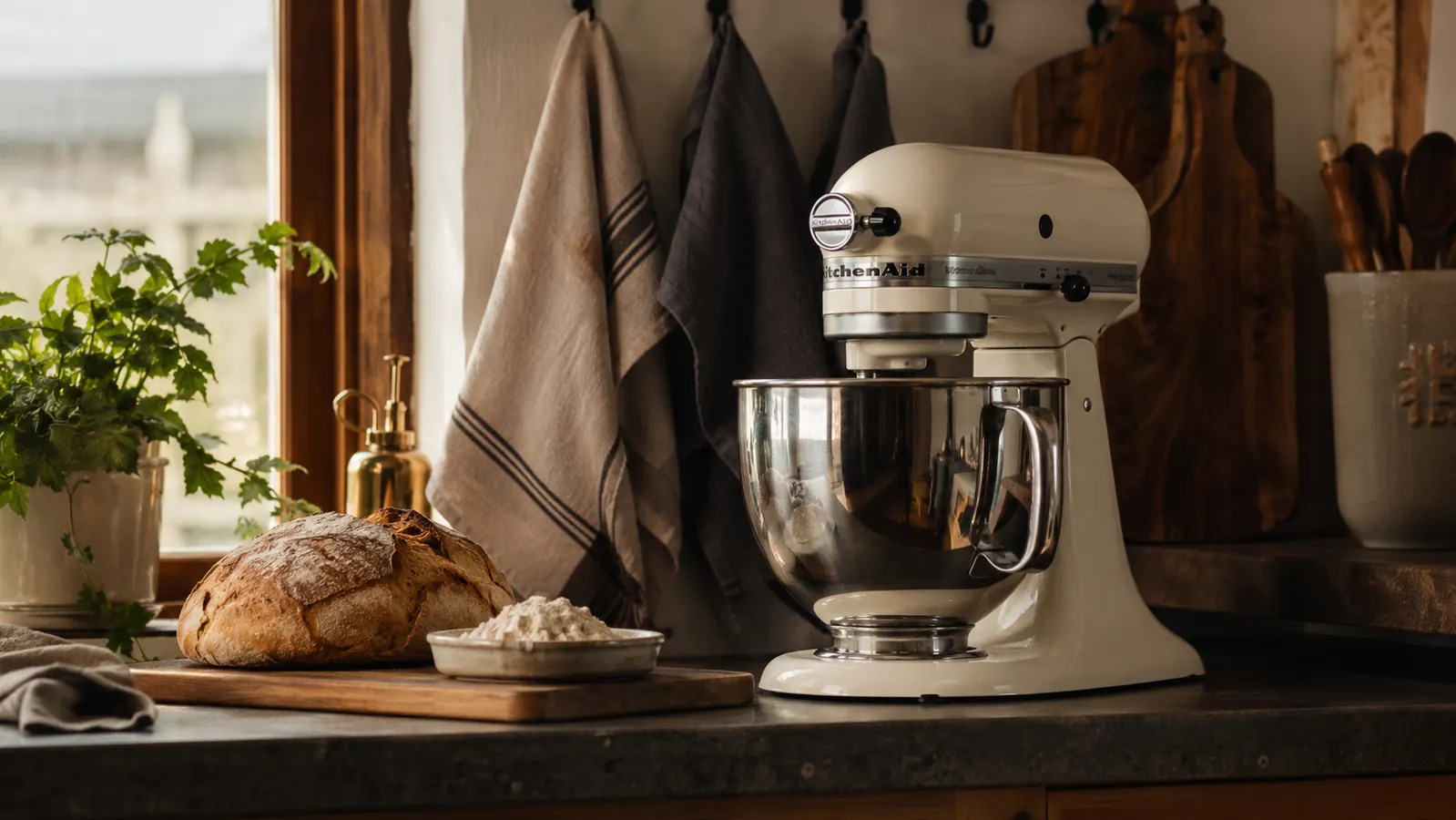
For most of my cooking life I mixed by hand. Wooden spoon, stainless bowl, and my own two arms, and I did not think much of it. Then came the winter when I was creaming butter and sugar for a birthday cake at eight in the morning, my old hand mixer started smoking, and I stood there holding a dead appliance and a half-made batter. That was the morning it clicked that the stand mixer was not a luxury gadget. It was the tool that does the job my hands had quietly been doing for forty years, and it does it better.
So let me be plain about the KitchenAid Artisan 5-quart that sits on my counter now. It won the spot honestly, and it has deserved it. But I have kept my hand mixer, because some days a hand mixer is the right tool too. Here are the ten reasons the stand mixer wins on a normal week, and the one honest downside at the end.
The KitchenAid Artisan that finally replaced my sore right shoulder
I have used mine almost every week for three years, and it has never once smoked on me. If you are still creaming butter by hand and your arm tells you about it afterward, this is the model I would buy again.
Amazon Check Today's Price on Amazon →Your bowl stays put. Mine stopped climbing every wall
The bowl locks into place, so you hold nothing. My old system was wedging the stainless bowl into a corner of the counter with a folded towel and still chasing it halfway across the kitchen once the beaters grabbed. The tilt head locks the bowl in too, so I can scrape down the sides with a spatula and the bowl does not move. That sounds small until you do it three times a cake.
Your butter gets creamier in two minutes, every time
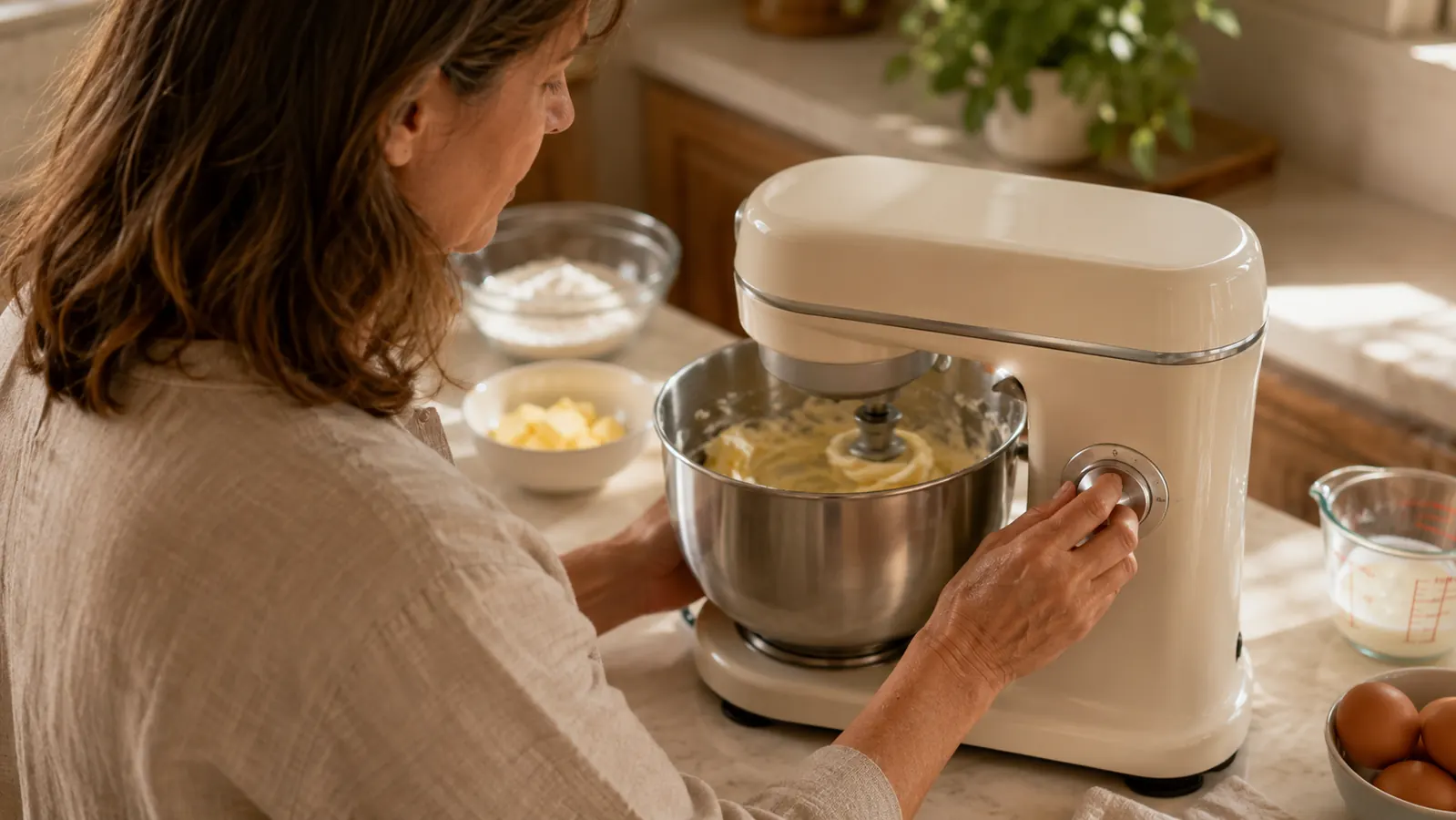
A stand mixer whips air into softened butter at a steady speed that does not wander. Hand mixing depends on how your arm feels that morning and how fast you go. With the KitchenAid, butter and sugar turn pale and fluffy on their own while I measure the flour. That one change made my cookies lighter, and I did nothing clever to get there.
Dough that fights you is exactly what it is built for
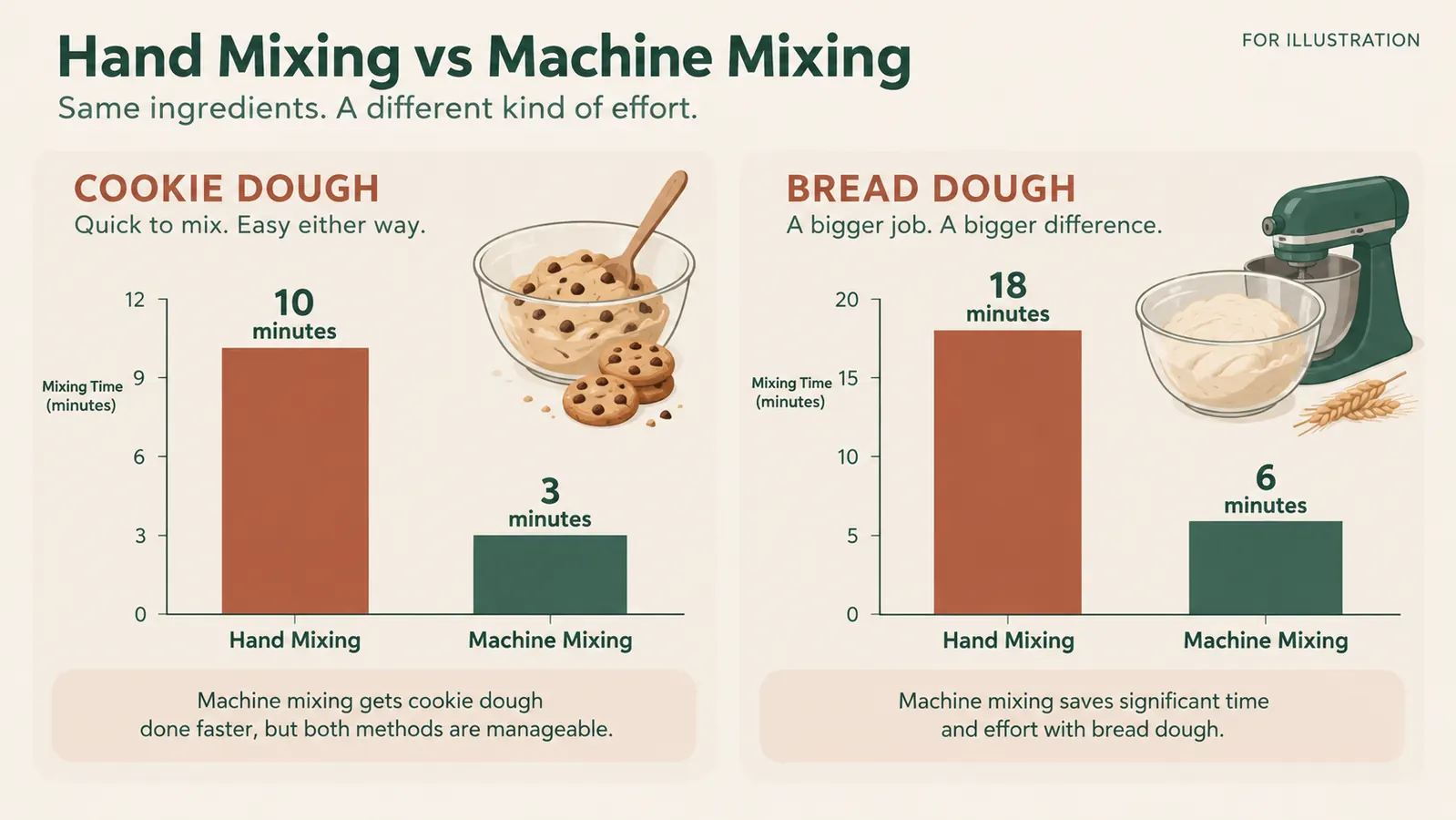
Bread and pizza dough are too stiff for a hand mixer, and they burn out hand mixers because the beaters cannot turn freely. The stand mixer handles thick dough with less strain because the motor is built for it and the bowl is anchored. My daughter-in-law asked to borrow my hand mixer for her bread and I told her no, she could borrow the one upstairs instead. Stiff dough is the stand mixer's whole job.
It creams a full batch, not a single bowl at a time
If you bake for more than yourself, the size is the difference. My old hand-mixer approach meant splitting a double cookie recipe into two bowls and creaming each, then combining. The 5-quart bowl takes the whole batch at once. For a house with kids or a birthday crowd that keeps coming, making a full recipe in one go instead of two is the quiet relief.
You walk away while meringue whips, and it does not over-whip
Meringue and whipped cream used to be a timing ordeal: stop at the exact right second or you get butter. With the stand mixer I can set the speed and watch the neighbors' dog out the window without ruining a batch. The steady speed is easier to leave alone, and for a cook who is also decorating and doing three things at once, that matters more than I can say.
Impossible to hold a hand mixer for thirty straight minutes
Frosting a big batch of buttercream or a double batch of dough can run twenty to thirty minutes. Holding a hand mixer up that long is specifically the sort of thing that makes my shoulder ache by evening. The stand mixer sits there and lets gravity hold it. That is not a comfort feature. For a cook my age it is the difference between a pleasant baking afternoon and a stiff arm afterward.
Cleanup is a washable bowl, not two beaters plus splatter
Here is the honest math most gadget articles skip. A hand mixer leaves you with two beaters that are awkward to wash because food sticks in the wire middle, plus a splattered bowl and counter. The stand mixer leaves you with one bowl in the dishwasher and a wipe of the beater. On the days I do two batches, the cleaning difference sells the stand mixer by itself.
More consistent from one batch to the next
Because the speed is set and held, every batch comes out like the last good one. Hand mixing is a different pace every time: fast when I am in a hurry, slower when I am tired. For cookies that need to be the same every week for a standing order, or for my own standards, consistency is worth more than any single batch. The stand mixer is a repeatable tool, and repeatable is what baking wants.
It doubles as a pasta and veggie prep station
The attachments are where the real return shows up. The same motor that creams butter also takes the pasta roller for fresh noodles, the grater for squash and carrots, and a food grinder come the holidays. I am not here to sell you on attachment shopping, and the base model is a mixer, not a full food processor. But the pasta roller on my shelf has paid for part of the counter it lives on.
It is the last mixer you will buy, and the one you will hand down
My hand mixers lasted a few years each before the motor smelled hot. The KitchenAid has gone three years of near-weekly use and shows no sign of slowing, and the brand's reputation for lasting decades is honestly earned. I replaced a dead hand mixer maybe four times over the years. I expect to buy this stand mixer for the rest of my baking life, which ends up cheaper per year and easier on my arms.
What I'd Skip, Honestly
A stand mixer is not for every cook. If you bake once every few months, or only ever whip egg whites, a hand mixer is cheaper, takes no counter space, and I would tell you to keep the money. Small quick jobs like folding one batch of eggs into one batter are faster by hand, and I still do those by hand to this day. Start with your honest frequency, not the pretty picture of a kitchen that never sleeps. If you bake most weeks, the stand mixer earns its space. If you bake twice a season, it does not, and that is an honest tradeoff, not a small one.
My hand mixers lasted a few years each before the motor smelled hot. Three years of near-weekly use and this KitchenAid has never once done that.
If you bake most weeks, this is the mixer that earns its spot
The honest test is your own schedule. If it passed, start with the KitchenAid Artisan I have used for three years. It is the last mixer I plan to buy.
Amazon Check Today's Price on Amazon →