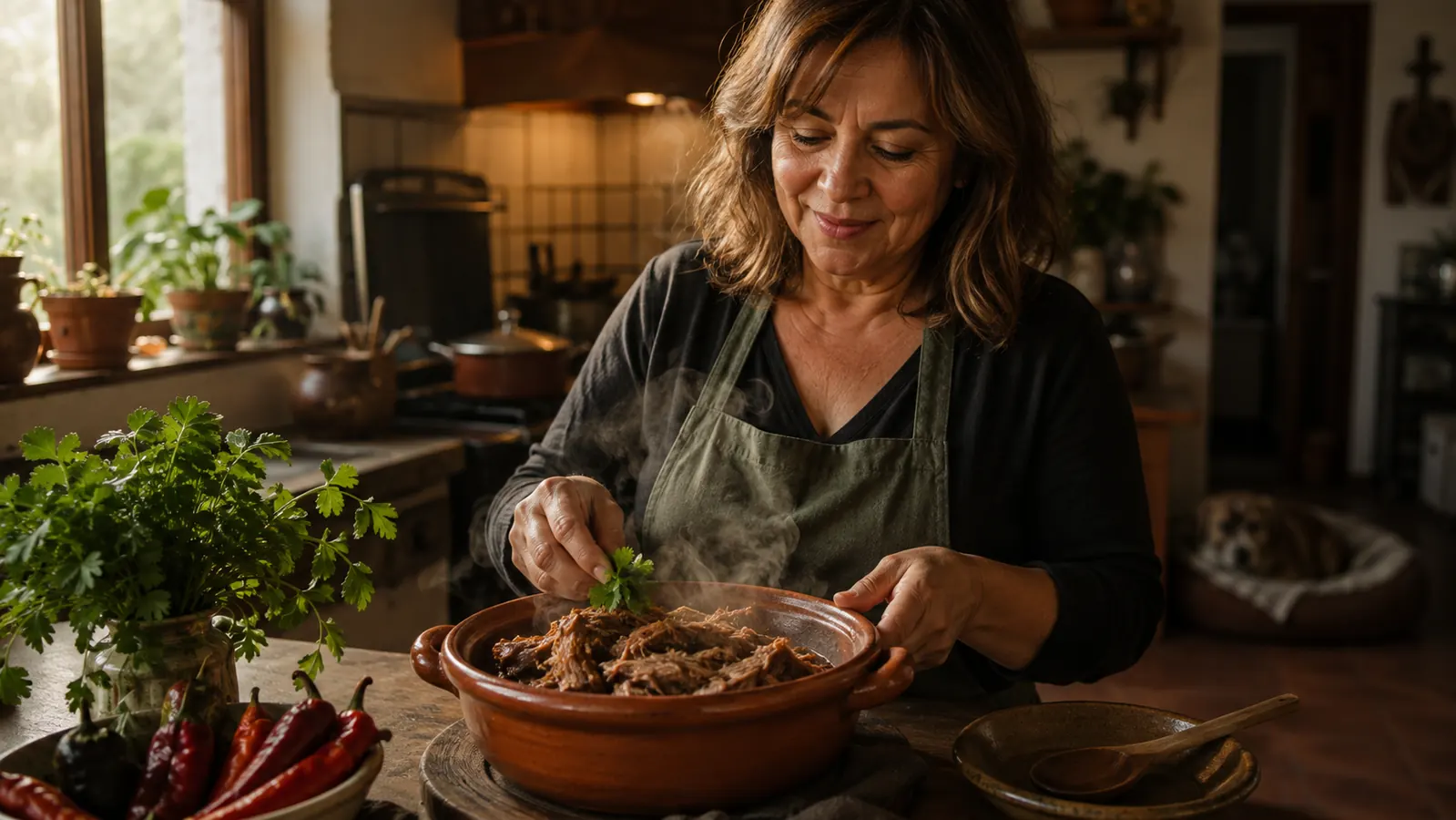
I have kept a Crock-Pot on my counter for most of my cooking life, and for a season I also owned an Instant Pot. I did not buy the Instant Pot to replace anything. I bought it because my son swore by it for rice and weeknight beans, and I wanted to see for myself, because every Thanksgiving somebody at the table tells me their Instant Pot does everything my slow cooker does and does it faster. After months of running both for real, I can tell you the honest version: they share a cooking style on the surface and differ completely underneath, and which one you should own depends on whether you cook for speed or cook for the pot.
The short answer, so you are not left dangling: if you want a slow cooker, the Crock-Pot is the better one, full stop. It simmers gentler, cleans easier, and it will never hand you a machine that needs gaskets and valves watched. The Instant Pot is a wonderful pressure cooker and rice cooker that also has a slow setting. If most of your slow cooking is a pot of chili or a pot roast you want to start at noon and eat at six, you want the Crock-Pot. If you want one appliance that pressures, sautes, steams, and makes yogurt, and you only slow cook once in a while, you want the Instant Pot. These are two different tools that share a name.
How I Actually Used Both
This is not a spec sheet argument. For one full autumn I ran both machines on the same recipes, back and forth, so my hands made the call instead of the box. On the Crock-Pot side I made the chili I feed company, a flat-iron pot roast, bone broth that went into everything, and pulled pork for a Sunday when the house was full. On the Instant Pot side I did the same chili and the same pork, plus all the things it is genuinely good at: an instant-pot roast under pressure, rice for the week, hard eggs, and a quick bean pot.
What I watched for is the list that decides whether an appliance earns its space instead of hiding in a pantry. How the food comes out, how the pot cleans, how much attention the machine demands while it runs, whether a batch of chili tastes of something cooked all afternoon or something hurried, and what happens a few years in when a part wears. Those matter to a person who has owned the same cast iron since her thirties and expects a pot to behave the same way.
There are dogs underfoot in my kitchen, and they wander over to whichever pot smells like dinner. That is not a measurement, but it is not nothing either. I wanted to know which machine made the food my house actually reached for, not which one sounded good in a review.
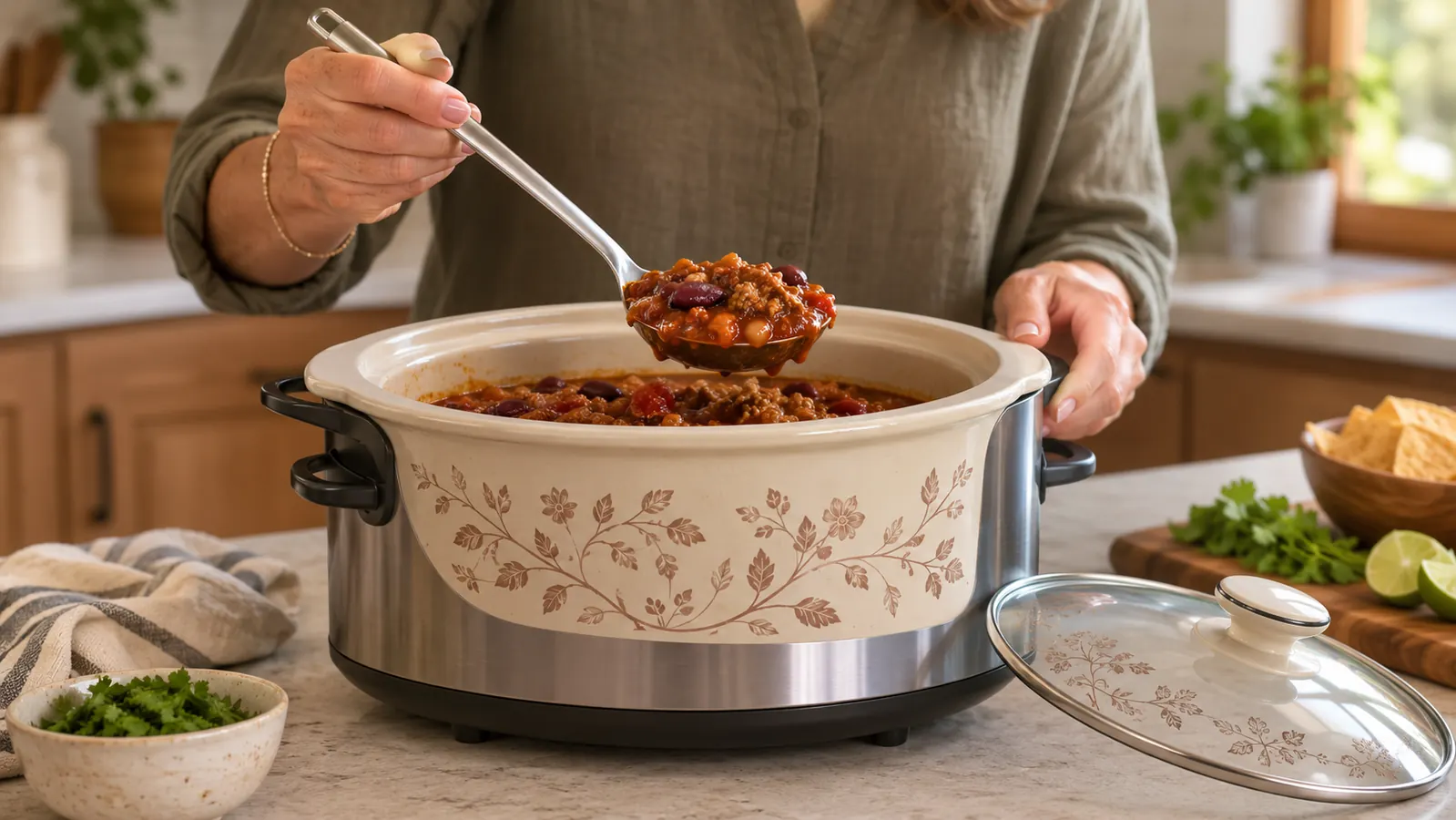
Batch size is part of why the Crock-Pot earned its corner. The 7-quart oval holds a full pot roast, a chicken with room around it, or enough chili to feed eight, and when I fill it on a Sunday I have dinner for most of the week plus a few containers for the freezer. The Instant Pot I used was smaller, and while it did everything well, a batch that fed the week was not really its wheelhouse. If you cook for more than two, the bigger, lower, slower pot is hard to argue with.
| Crock-Pot 7-Qt (our pick) | Instant Pot 6-Qt | |
|---|---|---|
| Best slow-food result | Gentle low simmer that builds flavor over 6 to 8 hours | Tender quickly under pressure, but the low-heat slow mode runs warmer and the flavor has less time to develop |
| Speed for weeknights | Set in the morning, done at dinner; no faster option | Braised meat, beans, and rice in a fraction of the time |
| Cleanup | One stoneware insert and a glass lid, both dishwasher safe, no hidden parts | More to wash and watch: a sealed lid, a silicone ring that holds odors, a valve to keep clean |
| Set-and-forget | Truly walk away for the afternoon, it is off or warm when done | Needs you to seal, vent, and release pressure; the slow mode is not its natural home |
| Jobs it also does | Slow cooks, keeps warm, period | Pressures, sautes, steams, rices, makes yogurt |
| Parts that age | A heating base and a stoneware pot that last for years with no seal to replace | A silicone sealing ring and valve that wear and need replacing |
| Learning curve | Plug it in, turn a dial, go | A sealed lid, settings list, and a safety release to learn first |
| Footprint | Wide oval base, about the same counter as any slow cooker | Taller and heavier, room for the pot but it sits proud on the counter |
Where Crock-Pot Wins
The first thing is the simmer itself. A slow cooker's whole reason for being is a low, gentle heat that lets a pot of chili or a pot roast work toward tenderness over hours without a thought. The Crock-Pot does that as well as any I have used. Food comes off it tasting like it cooked all afternoon, because it did, and that unhurried build is exactly what I want out of slow food. The Instant Pot's slow mode runs warmer, and while you can do it, you are asking a machine built for speed to do the one job that is about patience.
The second win is cleanup, and this is not a small thing in a house that cooks every day. The Crock-Pot is one stoneware insert and a glass lid, both of which go in the dishwasher, and there is nothing else to it. The Instant Pot asks you to handle a sealed lid, wipe a silicone ring that holds onto the garlic from Tuesday, and keep a valve clean. After a long day, the machine that hands you the least to think about is the one you will actually use.
The third is the set-and-forget promise taken literally. I can put a pot roast in the Crock-Pot at noon, go read for a couple of hours, walk the dog, and come back to a finished dinner that has switched itself to warm. There is nothing to seal, vent, or release, because pressure does not live here. That is the whole appeal of slow food to me, and the Instant Pot, for all its speed, is not built around that calm.
The fourth is cost, and I will not quote numbers because they move, but the honest shape is real: a Crock-Pot is comfortably the simpler, lower-powered machine, and it shows in the price and in the quiet, uneventful way it works. You are paying for a base, a stoneware insert, a glass lid, and one dial. There is no electronics board, no sealed lid, no release button to wonder about, and for the cook who wants the appliance to stay out of the way, that simplicity is the feature.
If you want slow food that truly cooks while you live your day, this is the pot
The Crock-Pot 7-quart is our pick for the cook who wants to set a roast or a chili at noon and pull a finished, gentle-cooked dinner off at six, with one insert to wash and no pressure settings to babysit. It is the appliance that earns its counter by cooking while you do something else.
Amazon Check Today's Price on Amazon →Where Instant Pot Wins
Let me not pretend the Instant Pot is the loser across the board, because anyone who tells you that is not being straight with you. It beats the Crock-Pot on the dimension the Crock-Pot has no answer for: speed. When I want a pot roast on a Tuesday instead of a Sunday, the Instant Pot has it done under pressure in about an hour, and the result is genuinely tender, just faster and with less chance for the flavor to deepen. If your slow food is never planned, if dinner is decided at five instead of noon, the Instant Pot wins your weeknights outright.
It is also a whole tool set in one body: a pressure cooker, a rice cooker, a steamer, a saute pan, and a yogurt maker. That matters if you have limited counter and want fewer appliances to find homes for. My son uses his mostly for rice and beans, never slow food at all, and he loves it. The Instant Pot does a great many things competently. It just happens that the one thing it does less well than the Crock-Pot, in my opinion, is the exact job called slow cooking.
And I will give it the cleanup credit where it is due in reverse: because the Instant Pot cooks so much faster, there are fewer hours for the pot to bake on food, and a pressure-cooked stew rinses out more quickly than one that simmered all day. It does not have fewer parts to mind, but the parts it does have are usually easier to knock clean. That is a real point in its favor on a busy night.
An Instant Pot is a wonderful pressure cooker that also has a slow setting. A Crock-Pot is a slow cooker, and that is all it promises, which is why it is better at the one job.

What Nobody Tells You About Either Pot
The biggest surprise was not about cooking but about expectations. The Instant Pot crowd talks about the slow function as if it were a free bonus, and it sort of is, but it is not the main event. When I ran a long stew on its slow setting, the pot ran warmer and the liquid reduced more than it did in my Crock-Pot, so I had to nudge the recipe. That is fine once you plan for it, but nobody selling the machine on its slow mode mentions it.
The other thing nobody tells you is that speed has a cost you can taste. A braise that cooks under pressure for an hour comes out tender, but it does not develop the same deep, layered flavor as one that has had six hours of low heat pulling sweetness out of onions and richness out of the meat. That is the honest trade. Speed gets you tender. Time gets you flavor. For a pot of chili meant to feed company, I always want the time.
Who Should Buy Which
Buy the Crock-Pot if your habit is a pot of chili, a pot roast, pulled pork, or bone broth that you start in the morning and want finished by dinner. If you cook slow food often enough for it to be about the unhurried simmer rather than the hour, if you want one insert to wash with no gaskets and valves to keep, and if the idea of a sealed lid and a pressure release gives you no pleasure, this is the one. It does one job and does it superbly, and it will quietly feed a house for years.
Buy the Instant Pot if your real need is speed, if you want pressure-cooked tender meat on a weeknight or rice and beans as the backbone of cheap meals, and if slow cooking is a once-in-a-while thing rather than a lifestyle. Buy it if one countertop appliance that pressures, sautes, steams, and makes rice beats five single-purpose machines. Just know that if you plan to use it mostly for low-and-slow food, you are paying for a faster machine to perform its slowest, weakest trick.
The honest close, and I keep a Crock-Pot for a reason: they are not rivals the way the argument at Thanksgiving makes them out to be. They are two tools with different reasons to be in a kitchen. For the cook who wants a thing she can set at noon and find dinner in at six, with nothing to monitor and one pot to wash, the Crock-Pot is the better buy every time. Over the years it has earned its corner, and that is the highest thing I can say about any appliance.
The Long-Term Verdict
After a whole season running both, here is where I land. I kept the Crock-Pot and passed the Instant Pot to my son, who uses it exactly as I suspected he would, for rice and beans and an occasional fast pot roast, and he is thrilled. That is not a verdict against the Instant Pot. It is a verdict about matching the tool to the life. My slow cooking is planned, patient, and done in batches, so a machine built for exactly that is the right one for me.
If I were asked to pick one machine for a cook who wants to stay out of the weeds, it is the Crock-Pot without hesitation. It does one thing, does it gently, and does not ask to be maintained. You can buy it with your heart at rest, start a pot at noon, go read your book, and have dinner at six. In my kitchen, that is worth more than any list of settings.
The set-and-forget pot that just works, bought once and kept
If the comparison reads like the part of you that keeps a schedule and wants dinner to happen without hovering, the Crock-Pot 7-quart is the pick. It is the slow cooker that earns its counter by cooking meals while the rest of your day goes on. Check today's price and see if it fits the corner of your kitchen.
Amazon Check Today's Price on Amazon →