Bone broth costs more at the cold case than the chicken it came from, and chili on a weeknight usually means a can and a jar. I lived that way for years, buying broth by the cardboard and reaching for jarred chili when I was too tired to do better. Then the lid on my old slow cooker cracked and I refused to tape it a third time, so I got a Crock-Pot 7-quart, and it quietly rearranged how I cook. This is the plain, honest way I make bone broth and chili in it now. It is mostly measuring, then walking away.
A slow cooker asks nothing of you. That is the whole appeal, and it is the reason the thing has held a corner of my counter for decades. No stirring every few minutes, no watching a pot that might boil over while you are in the other room. You roast the bones if you have ten minutes. You measure. You set the dial to Low. You leave. On a day when I have dogs underfoot and a book half finished, that is exactly the appliance I trust with dinner and with a week's worth of broth.
I am not a gadget person. I want tools that earn their space and are easy to clean, and the Crock-Pot is one of the few things I keep out all year instead of stashing in a cabinet. The ceramic crock lifts straight out and washes in the sink, and the base just wipes down. Because it does its work unattended, it does not ask me to hover over it the way my stove does. That makes it a better match for a kitchen that is part of a life, not a separate project.
The Crock-Pot That Feeds Your House for Days
Both of these recipes fill the 7-quart crock, so one batch makes a full week of broth and a few dinners of chili. The dial is simple, the crock lifts out for easy cleaning, and it serves eight or more. Check the current price and delivery timing on Amazon today.
Amazon Check Today's Price on Amazon →Before either recipe, gather a few things so a long cook day does not turn into a grocery run at dinner. For the broth you want bones plus the humble vegetables: onion, carrot, celery, a bay leaf, salt, and ideally a big bowl and a colander lined with cheesecloth for the straining. For the chili you want the meat and the pantry cans. None of it is precious. Buy what is on special, because the slow cooker does the heavy lifting and the ingredients do not have to be fancy.
Step 1: Roast the Bones First, if You Have Ten Minutes
For the broth, pick up a couple of chicken carcasses or a bag of beef bones from the butcher. Roasting is optional, but it is the one step that turns broth from warm chicken water into something deep and rich. Spread the bones in a single layer on a rimmed baking sheet and put them under the broiler for about ten minutes, until they are browned in spots. No fussy brushing, no turning over. Brown is flavor.
If it is a day with no time for even that, skip it. The slow cooker will still pull the collagen and gelatin out over the long simmer, you just lose a little of the caramel taste. I have made excellent broth both ways. Roasting is a bonus, not a requirement. I would rather you make the broth than talk yourself out of it because a recipe demanded a step you could not fit in.
Step 2: Load the Crock and Cover With Cold Water
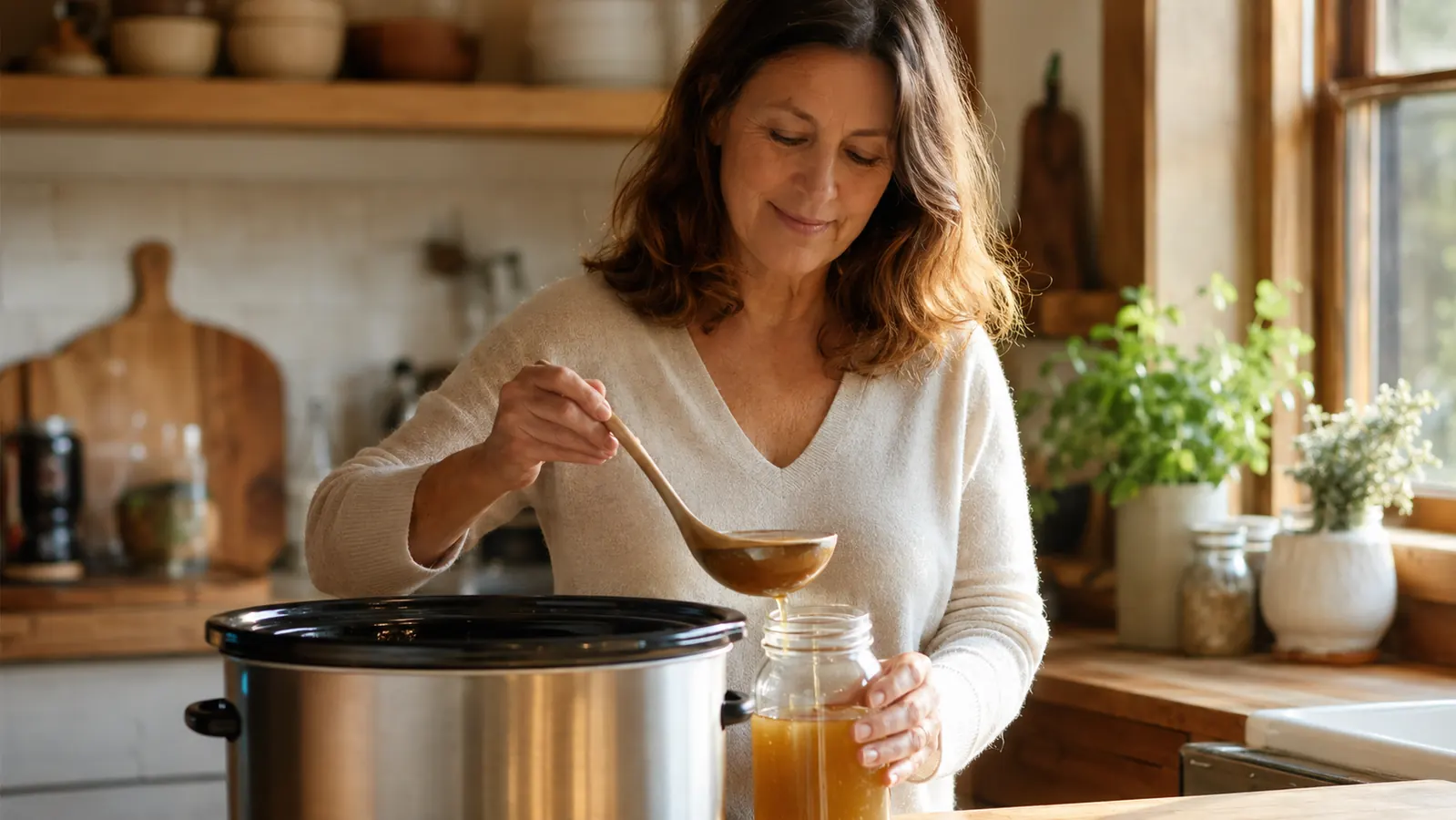
Put the bones in the 7-quart crock. Add an onion cut into quarters, a couple of carrots, a few clean celery ribs, a bay leaf, and a good pinch of salt. Then cover everything with cold water. Cold matters here, because starting cold lets the impurities come to the surface gradually so you can skim them off instead of stirring them back in.
Do not fill the crock to the rim. Leave a couple of inches of headroom so nothing bubbles over onto the counter, which is the one real mess this appliance makes when you crowd it. Set the dial to Low. That is the whole of it. The broth needs eighteen to twenty-four hours, so this is a morning task, started before the tea. It does its work while you go about the day.
The proportions forgive almost anything. A carcass from one store-bought rotisserie chicken plus a handful of roasted bones makes a fine broth. Add a knob of ginger or an apple peel if you like a little warmth, or leave it plain so the broth stays neutral enough for any recipe you pour it into. This is not baking, where a changed measurement ruins the result. The slow cooker smooths out your mistakes, which is the most forgiving part of the whole method.
Step 3: Set It Low and Walk Away
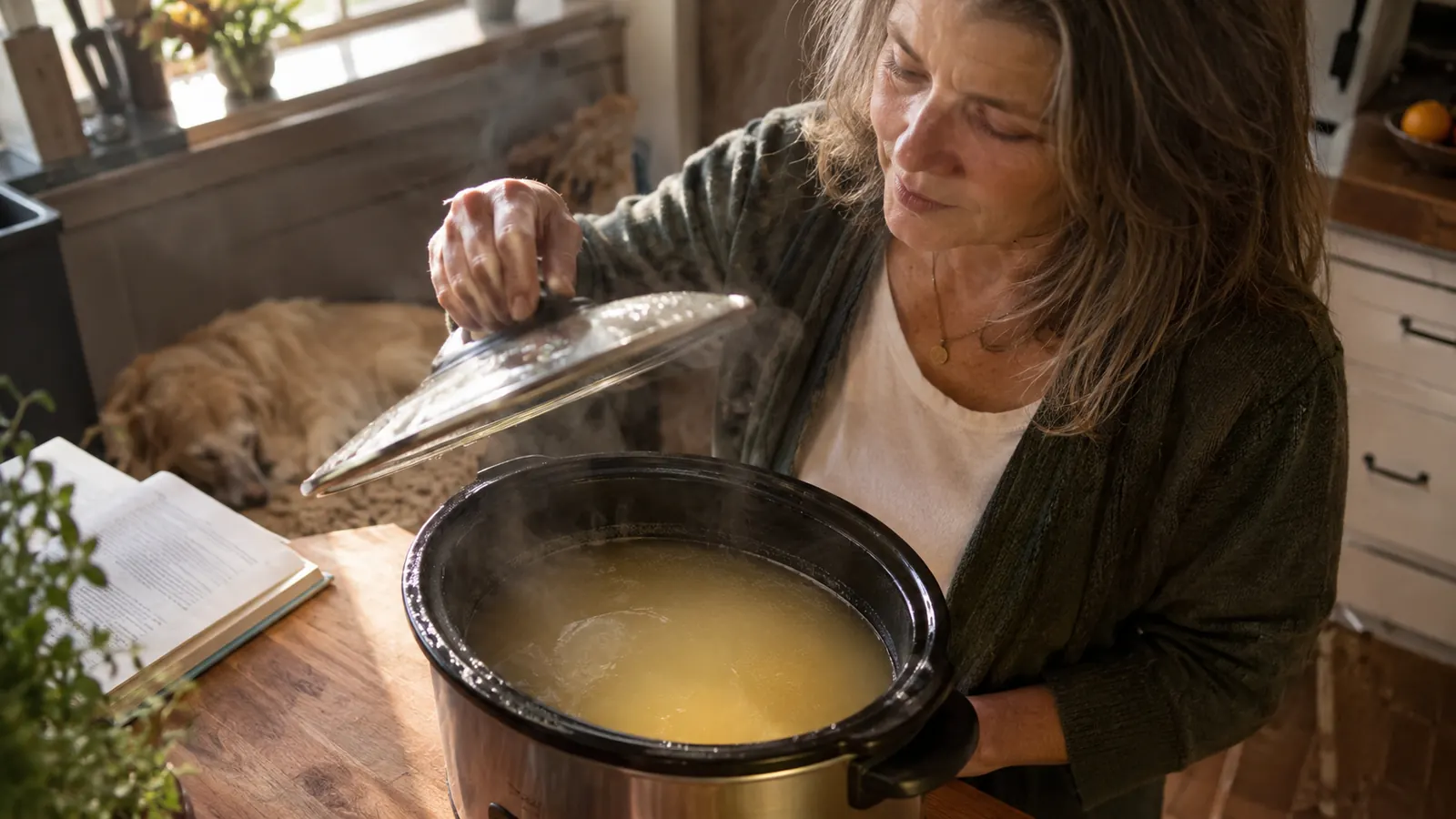
This is where the Crock-Pot earns its keep relative to a pot on the stove. A stockpot on low needs watching, and the pilot light on my range runs hot enough that a full boil will ruin a broth by clouding it. The Crock-Pot holds a gentle simmer all by itself for a full day. Set that dial to Low in the morning, and it stays there without you.
Come by once or twice with a ladle and skim the foam off the top. That is the only attention it asks. Around hour twelve, your kitchen starts to smell like the inside of a good soup kitchen, which is the smell of dinner deciding it is ready. Leave it alone. The gelatin needs the full time to melt out of the bones and into the liquid, and that tail end of the long simmer is where the broth turns from watery to silky.
Do not be tempted to turn it up to High to save time. High on a long broth can pull the liquid cloudy and the flavor flat. Low is not slower, it is correct. The dials on this Crock-Pot are plainly marked, Low, High, and Off, no digital panel to learn, which is exactly what I want in a tool I reach for without looking. If you are gone all day, Low and a full crock is the setup you can trust to be ready when you get home.
The Crock-Pot holds a gentle simmer all by itself for a full day. Set the dial to Low in the morning, and it stays there without you.
Step 4: Strain, Cool, and Store So It Actually Lasts
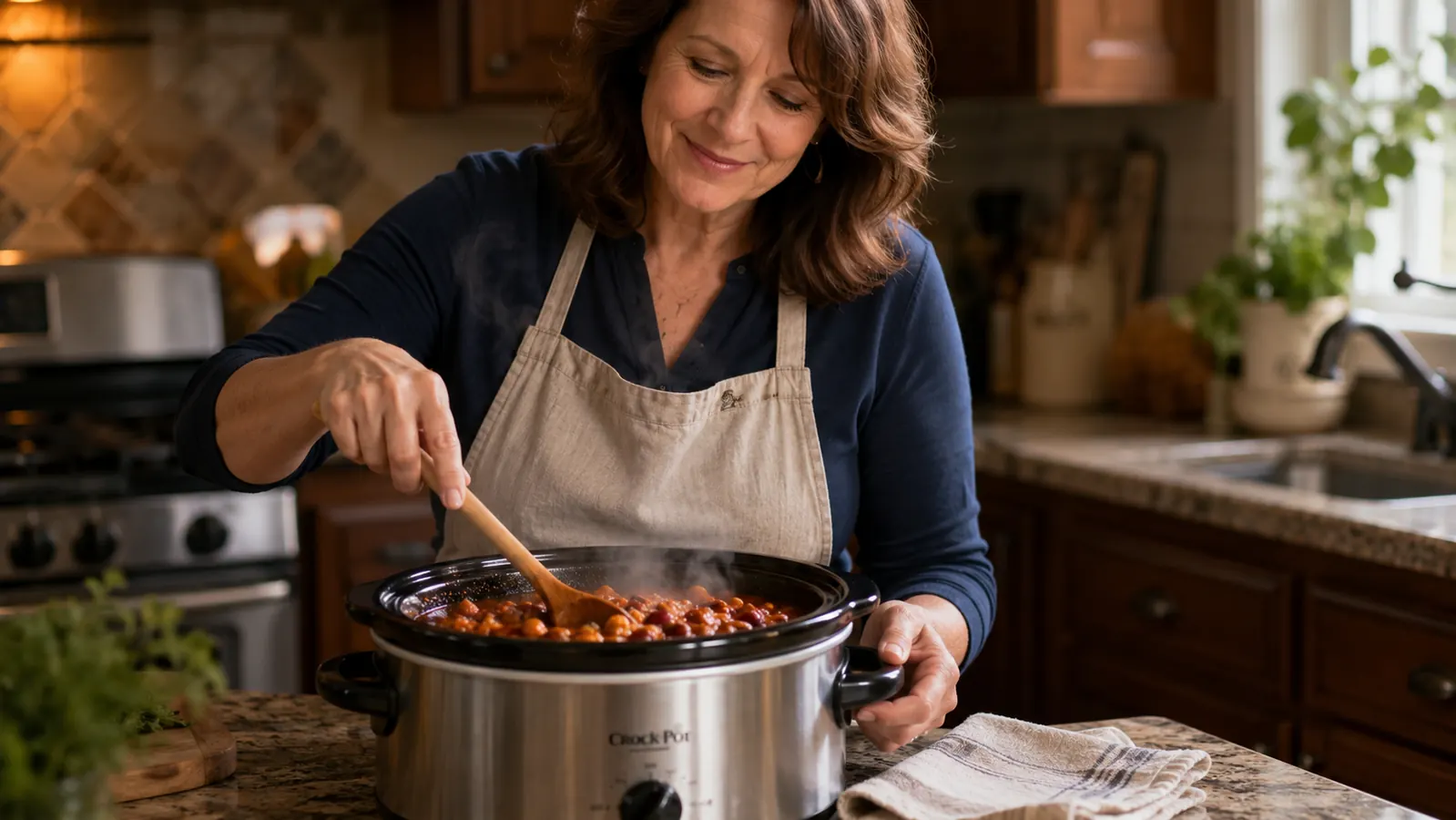
When the full day is up, turn it off and let it sit until it is safe to handle, maybe twenty minutes. Set a colander lined with cheesecloth over a big bowl and pour the whole lot through. Discard the bones and the soft vegetables. What is left is a deep amber broth, and when you chill it overnight it sets into that jiggly gelatin that tells you it came out right.
I pour mine into wide-mouth jars, leaving plenty of headroom, and refrigerate. It keeps about a week in the fridge, or freeze it for months, and always leave an inch of extra space because broth expands as it freezes. A layer of fat settles on top. Skim it off for clear broth, or stir it back in because it carries flavor. Either is fine, and honestly the homemade broth beats the store kind in both clear and rich forms.
I keep a permanent jar of this broth in the fridge, the way other people keep a pitcher of tea. It becomes the base for far more than soup. I warm a cup with a whisked egg for a fast breakfast, I use it instead of water when I cook rice, and I deglaze a hot skillet with it when I am browning the beef for the chili that comes right behind this recipe in the same crock. A broth that sets to gelatin is the kitchen equivalent of money in the bank, and it never requires a thought to use.
Step 5: The Chili: Brown the Meat, Load the Crock, and Simmer
Now that the crock is empty and clean, chili is the lazy genius of the same appliance. Brown two pounds of ground beef in a skillet first. It is one extra pan to wash, but browning before the slow cooker is what keeps the chili from tasting like boiled meat. Drain the fat, then dump the browned meat into the crock.
Add two cans of diced tomatoes, a can or two of beans, a chopped onion, a big spoon of chili powder, cumin, smoked paprika, garlic, salt, and a squirt of tomato paste. Stir once, set it on Low, and it is ready in about six hours, though it only gets better if it goes eight. The 7-quart crock holds the entire batch, which feeds my house for two dinners and freezes a third.
Chili suits the slow cooker because it is forgiving about timing. Dinner running late, the game running long, fine. Low keeps it warm for an hour or two without burning the bottom, as long as you stirred once at the start. For my house I keep the heat mild and pass a little hot sauce at the table, so everyone controls their own. That is the sort of small choice that turns a good batch into an easy one.
Toppings are where chili becomes personal, so I set out a small board instead of folding everything in. Shredded cheese, chopped onion, sour cream, and a jar of pickled jalapenos let everyone build their own bowl while I stay out of it. The savory depth from the smoked paprika carries even a mild batch, and the slow cooker does the work of melding the flavors during the long simmer, which is the difference between chili and soup with a canned taste.
What Else Helps
Two things made these recipes easier than they sound. The first is a decent set of jars you can freeze, because once you discover how cheap and good homemade broth is, you will want more on hand rather than less. The second is a good ladle and a fine strainer, the sort of simple tools that make a long process feel calm instead of fiddly. Neither costs much, and both get used every time.
Half this batch is just as easy, and a single serving also works. The 7-quart Crock-Pot does not demand to be full; you can put a small amount in on Low and it will still cook gently. What I have never found is a downside to the larger size, because a full crock of broth for a cold weekend, or a full crock of chili when company is coming, covers an entire week of meals for the trouble of one measuring session.
And be honest about one thing: the slow cooker is not fast. Nothing in this article happens in twenty minutes. What it is, is dependable. You start it and walk away, and eight or twenty hours later you have something a store charges a fortune for. That trade, slow for cheap and easy, is the whole reason the Crock-Pot has owned a corner of my counter for decades. It feeds the house, it cleans up in a few minutes, and it lets me read my book in the meantime.
One honest caution: if your broth chills thin instead of gelling, it was not cooked long enough, had too much water, or the bones were mostly clean-cut with little connective tissue. It is still good broth, just less silky. Next time simmer longer and add more joints and knuckles, which carry the gelatin. Do not throw it out. And if the chili tastes flat, the usual fix is one more spoon of salt and a shake of cumin, tasted after it simmers, not before.
Start With a Crock-Pot You Can Trust
If you are tired of cardboard broth and jarred chili, the 7-quart crock is the same tool for both jobs. One purchase, two regular recipes, and leftovers for days. Check today's price on Amazon and see when it can reach your door.
Amazon Check Today's Price on Amazon →